What Do Silkworms Eat? A Practical Guide to Feeding Bombyx Mori
Raising silkworms at home is one of those quiet, satisfying projects that connects you to a process humans have refined for thousands of years. Whether you are hatching your first batch of silkworm eggs or you have already raised a few generations, the single most important question is always the same: what do silkworms eat? The answer is simpler than you might think, but the details matter a lot if you want healthy larvae, strong cocoons, and a successful hatch of silkworm moths.
The Only Food That Works
Bombyx mori, the domesticated silkworm, eats one thing and one thing only: mulberry leaves. Not oak, not lettuce, not a commercial pellet you can buy at a pet store. Fresh mulberry leaves from a tree in the Morus genus are the sole natural food that supports every stage of the silkworm life cycle, from the moment the tiny larvae hatch until they spin their silkworm cocoon. If you do not have access to a mulberry tree, you can still raise silkworms using a high-quality artificial silkworm feed, which is usually made from mulberry leaf powder and a few other ingredients. But even then, the base is still mulberry.
So when someone asks "what do silkworms eat" for the first time, the honest answer is that they are obligate feeders on mulberry. That is not a limitation you can work around. It is a biological fact. The leaves contain specific compounds that silkworm larvae need to grow, and they have evolved over millennia to digest mulberry efficiently. Try feeding them something else and they will stop eating, stop growing, and eventually die.
Fresh Mulberry Leaves vs. Dried Mulberry Leaves
There is a common confusion among beginners about whether dried mulberry leaves work. The short answer is no. Silkworm larvae need fresh mulberry leaves that still have moisture in them. Dried mulberry leaves are brittle, low in water content, and the larvae cannot chew them properly. They will attempt to eat them if nothing else is available, but they will not thrive. In my experience, even leaves that have been off the tree for more than a few hours start to wilt, and once they wilt, the larvae lose interest.
If you are storing leaves for a day or two, put them in a plastic bag in the refrigerator. That keeps them crisp and moist. But never feed cold leaves straight to the larvae. Let them come to room temperature first, otherwise you can shock the digestive system of the silkworm larvae, especially in the early growth stages.
How Much to Feed at Each Silkworm Growth Stage
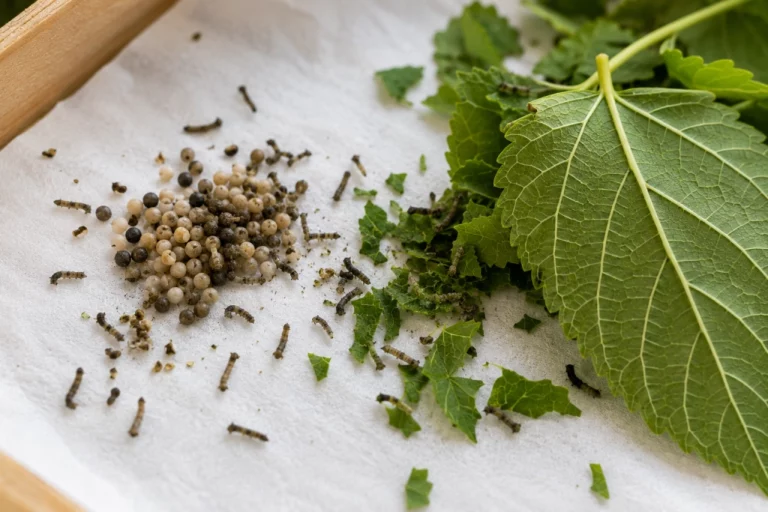
The amount of food changes dramatically as the larvae grow. When silkworm eggs first hatch, the larvae are tiny, about the size of a single eyelash. At that stage, they need very fine, tender leaves. Older, tougher leaves have thicker veins and a tougher epidermis that the small jaws cannot handle. I usually pick the smallest, lightest green leaves from the top of the tree for the first few days.
As the silkworm larvae move through their silkworm growth stages, they eat more and more. By the fifth instar, which is the last feeding stage before they start spinning, a single larva can eat an entire large leaf in a day. If you are raising a hundred larvae, you will need a steady supply of fresh mulberry leaves. That is where most hobbyists run into trouble. They underestimate the volume. A single mature mulberry tree can support a small colony, but if you have more than a few dozen larvae, you may need multiple trees or a reliable source of leaves.
Artificial Silkworm Feed as a Backup
There is a place for artificial silkworm feed, especially in winter when mulberry trees are bare. I have used it successfully for several generations, but there are trade-offs. The artificial feed is more expensive than fresh leaves, and it spoils quickly once mixed. You have to prepare small batches and keep the rest refrigerated. The larvae do not grow as fast on artificial feed, and the silkworm cocoons can be slightly smaller. But if you want to breed year-round or you live in an area without mulberry trees, it is a practical alternative.
When using artificial feed, the question "what do silkworms eat" becomes a matter of preparation and hygiene. The feed must be moist but not wet, and you need to remove uneaten portions daily to prevent mold. Silkworm disease is a real risk in humid, crowded conditions, and stale feed is a breeding ground for bacteria and fungi. I have lost whole batches to what looked like a bacterial infection that started in old feed. Now I am religious about cleaning the silkworm habitat every day.
Water and Moisture
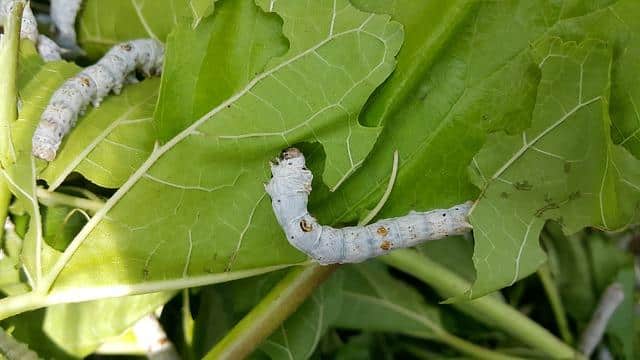
A detail that surprises many newcomers is that silkworms get all the water they need from fresh mulberry leaves. You should never add a water dish or spray water directly on the larvae. They cannot drink from a dish, and wet conditions promote disease. If the leaves are dry, you can rinse them and shake off the excess water before feeding, but that is the extent of it. The moisture in the leaves is enough to keep the silkworm larvae hydrated through every stage of the silkworm life cycle.
One mistake I made early on was leaving the leaves wet after washing them. The larvae seemed fine for a day, but then I noticed a few stopped moving. Within two days, the whole batch had a high mortality rate. It was a hard lesson. Now I always pat the leaves dry with a paper towel before placing them in the silkworm bedding area.
Feeding Through the Silkworm Life Cycle
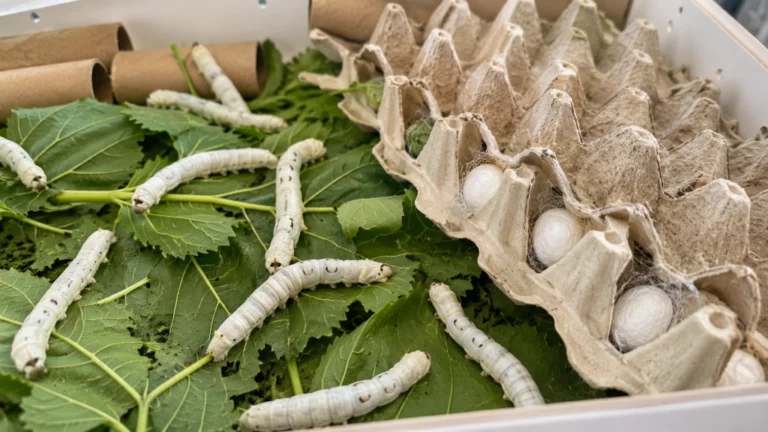
The feeding needs change at each phase. After the larvae have eaten enough and reached their full size, they stop eating altogether. That is the signal that they are ready to spin a silkworm cocoon. At that point, you remove all food and provide a structure for them to climb, such as a cardboard egg carton or a bundle of twigs. The larvae will find a spot, attach their silk, and begin the transformation into the silkworm pupa inside the cocoon.
During the pupal stage, the chrysalis does not eat at all. The silkworm moth that emerges later also does not eat. Adult Bombyx mori moths do not have functional mouthparts. They live only long enough to mate and lay silkworm eggs, then they die. So the entire feeding window is during the larval stage, which lasts about four to six weeks depending on temperature and leaf quality.
Practical Tips for Leaf Collection
If you have your own mulberry tree, you are in good shape. Pick leaves in the morning when they are full of moisture. Avoid leaves that show signs of insect damage or yellowing. If you do not have a tree, look for neighbors who do. Many people are happy to let you pick leaves if you ask politely. In some cities, mulberry trees grow wild along roadsides or in parks. Just be sure the trees have not been sprayed with pesticides, because that will kill your silkworms quickly.
For those serious about sericulture at home, planting a mulberry tree is the best long-term investment. They grow fast and produce plenty of leaves within two or three years. Dwarf varieties work well in containers if space is limited.
Common Feeding Problems and Silkworm Health
Poor silkworm health often traces back to feeding mistakes. The most common issues are wilted leaves, overfeeding, and feeding leaves from trees that have been treated with chemicals. Another issue is feeding leaves that are too old and tough. The larvae will try to eat them, but they will not get enough nutrition and their growth will stall. If you notice that your larvae are not growing or that they seem listless, check the leaves first.
Silkworm disease can also spread through contaminated feed. If you buy artificial silkworm feed, store it in the freezer and only mix what you need for two or three days. Clean the silkworm habitat regularly. Remove leftover leaves and droppings every day. Good hygiene prevents most of the common problems.
One More Thing About What Do Silkworms Eat
It is worth repeating that the question "what do silkworms eat" has a very narrow answer. That is part of what makes silkworm care so straightforward and also so demanding. You cannot substitute or improvise. But if you have a steady supply of fresh mulberry leaves, and you pay attention to the condition of those leaves, the rest of the process is remarkably forgiving. The larvae are hardy, they grow fast, and watching them spin their silkworm cocoon is one of the most rewarding experiences in home animal husbandry.
I have been raising Bombyx mori for several years now, and I still find it fascinating how such a simple diet supports such an intricate silkworm life cycle. From the moment the silkworm eggs hatch to the day the silkworm moth emerges, everything depends on those leaves. Get that part right, and you are well on your way to a successful hatch, strong cocoons, and the quiet satisfaction of participating in a tradition that goes back thousands of years.